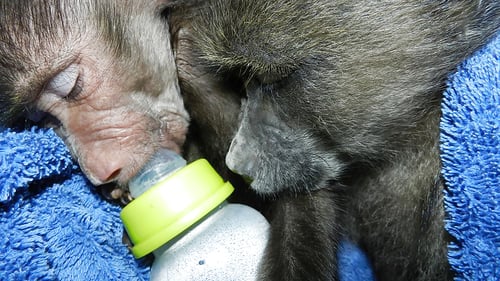
Volunteers will have the rare and exciting opportunity to actively participate in the conservation, rehabilitation, care and research of African wildlife. The sanctuary currently provides a safe refuge for orphaned, injured or conflict wildlife including several lions, leopards, cheetahs, wild dogs, caracals, warthogs, antelope and baboons as well as a host of birds, smaller African mammals and farmyard animals. Wildlife Conservation volunteers are crucial in helping to care for the animals in rehabilitation or permanent captivity at the sanctuary, as well as helping to maintain and develop the sanctuary. This is an exceptional opportunity to get hands on experience with African wildlife and the many aspects of their care. All routine aspects of the programme are carried out in a rotational group system to ensure that everybody gets exposed to the variety of experiences available. For the full experience and understanding of what the project does, we highly recommend that you book at least three weeks on project.
On the research sites:
You will be able to participate in anti-poaching efforts
You will be living close to many wild animals in the Namibian bush and nothing beats being surrounded by a pride of lions, leopards or cheetahs and being able to spend time observing their individual traits
You will be accompanied by other people who are very passionate about animals.
Learn and experience how each animal behaves, reacts and what their characters are like
Wij vonden {{ category.count + ' ' + (category.count == 1? category.label:category.pluralLabel) }} en {{ category.count + ' ' + (category.count == 1? category.label:category.pluralLabel) }} voor '{{ searchTerm }}'
0 Results found
Zoek naar bestemmingen, activiteiten, rondreizen, reisinspiratie, etc.
Wij vonden {{ category.count + ' ' + (category.count == 1? category.label:category.pluralLabel) }} en {{ category.count + ' ' + (category.count == 1? category.label:category.pluralLabel) }} voor '{{ searchTerm }}'
0 Results found
{{ cardLists.others.label }}
{{ cardSlider.label }}

Niet gevonden naar wat je op zoek was?
Neem contact op met ons, wij helpen je graag verder op weg.
Itinerary
Namibia Wildlife Rescue and Research
Project Highlights
Volunteer Tasks
Duties that do not directly interact with the animals are still crucial to their well-being. General maintenance and cleaning of the grounds (for example: cutting grass to ensure there are no ticks, fleas, snakes, and spiders, and poop scooping); are regular tasks on the farm for the health and safety of all the animals in our care. Each of the research sites gives you an opportunity to explore a different part of Namibia whilst still contributing to conservation efforts, it could be desert, coast, mountains, below are the highlights of the different options available.
Wildlife Sanctuary (Homebase)
Originating as a small wildlife sanctuary nestled in the Namibian bush, just 45km from Namibia’s capital, Windhoek, the Wildlife Sanctuary Foundation has grown into a world-famous conservation organisation, providing a safe haven and second chance for countless injured, orphaned and conflict animals. Whenever possible their goal is to release animals back into the wild - only those animals too ill, abused or habituated remain at the sanctuary. The volunteers are critical to enabling the project to continue caring for the animals.
Volunteer Tasks
Duties that do not directly interact with the animals are still crucial to their well-being. General maintenance and cleaning of the grounds (for example: cutting grass to ensure there are no ticks, fleas, snakes, and spiders, and poop scooping); are regular tasks on the farm for the health and safety of all the animals in our care.
- Food preparation and small animal feeding
- Carnivore feed
- Providing intensive care for juvenile wildlife
- Project work including building camps and new facilities, breaking down old structures, maintaining roads, fence work, assisting with the various projects that arise at the sanctuary and much more
- Monitoring high-profile species on the reserve
- Spoor tracking of reserve animals. Join skilled trackers to identify game and carnivore numbers and learn the ins and outs of animal populations in the bush, own food preparation and wildlife monitoring
- Focused research:
monitoring free-roaming carnivores
analyzing camera traps
analyzing GPS data
research on the Zannier Reserve by N/a’an ku sê
- Game counts on horseback
- Attending conflict calls (if they arise)
- Wildlife Tracking
- Maintaining camera traps & sorting through camera trap images
- Hiking
- Environmental rehabilitation including wire braiding
- Research presentations
- Forest conservation revegetation project
As a volunteer, you will be able to experience each of the various jobs on the farm; as the tasks are rotated among the volunteers to ensure each person has an opportunity to both help with farm maintenance and interact with the animals equally.
Kanaan Desert Retreat
Kanaan, a former film and holiday destination, is now a vital part of the Namib Sand Sea, offering unparalleled opportunities for active participation in wildlife management and firsthand desert experiences. Successfully managing this diverse wildlife area, with its iconic red sand dunes, open grass plains, and unique desert-adapted species, requires the collective effort of many hands. Guests are welcomed to contribute to recording crucial wildlife data, impacting the long-term preservation of the region. Flagship species include brown hyenas, spotted hyenas, and leopards. As a collaborative endeavor starting anew, visitors have the chance to play a significant role in shaping Kanaan's conservation narrative.
Volunteer Tasks
- Maintaining camera traps & sorting through camera trap images
- Environmental rehabilitation including wire braiding to replace fences
- Attend research presentations
- Forest conservation revegetation project
- Research focuses on spotted hyena, black-backed jackal and human-wildlife conflict mitigation.
- Game-count drives, camera trap collection and data sorting to share with the research office at Naankuse.
- Carnivore activities, including the spotted Hyena, black-backed Jackal, and Bat ear fox.
The Kanaan Desert Retreat volunteer program has been continuing with removing more jackal-proof fences and repurposing the wire to braid wires to reinstall on the fences to stop vehicles driving onto Kanaan illegally while still allowing the wildlife to move freely underneath the wire without getting stuck. A new project was started to build Owl boxes and install them at the waterholes.
- Hiking to find recent activities of carnivores
Please note: Kanaan is a vast open desert environment, and you are less likely to spot wildlife
Timbila Nature Reserve
Timbila encompasses 30,500 hectares of pristine wildlife habitat, serving as a haven for diverse fauna and flora. It’s residents include giraffes, white rhinoceroses, elands, Hartmann's mountain zebras, wildebeests, kudus, waterbucks, gemsboks, impalas, and Damara dik-diks. Functioning as a sanctuary for conflict animals and ambassador species, Timbila hosts African wild dogs, rehabilitated lions, and free-ranging carnivores such as leopards, cheetahs, and brown hyenas. Notably, the reserve focuses on monitoring rehabilitated lions and elephants originating from the Erongo Region due to human-wildlife conflicts. Camera traps have revealed fascinating nocturnal creatures like Aardvarks and elusive African Wild Cats. Timbila stands as a crucial space for conservation and research.
Volunteer Tasks
- The research is focused on monitoring the rehabilitated lions and elephants that came from the Erongo Region due to human and wildlife conflict situations.
- Camera Traps
- Tracking Rhino
- Removing of fencing
- Game counts
- Maintenance of camera traps
- Monitoring camera trap images
- Monitoring GPS data from collared carnivores
- Carnivore research
- Research of local ecology
- Participating in the release of wildlife (should the occasion arise)
- Learning tracking skills
- Road maintenance
- Fence maintenance
Harnas Wildlife Sanctuary
Founded in 1978 by the van der Merwe family, Harnas is Namibia's pioneering wildlife sanctuary, transitioning from family management to the current leadership of Marlice van Vuuren. Home to a diverse array of rescued wildlife, the sanctuary's mission aligns with its name, symbolizing a protective shield for animals and people alike. Beyond wildlife care, Harnas is dedicated to preserving the ancient San culture by empowering the local community through jobs, education, and healthcare. Harnas strives for national and international wildlife rehabilitation standards, aims to become a haven for endangered species, and seeks to develop sustainable, low-impact tourism activities.
Volunteer Tasks
- Focus on animal care in the oldest wildlife sanctuary in Namibia and learn fascinating skills from the ancient San people.
- Food Prep
- Small animal care & feeding
- Research
- Project Work
- Security Night Drives
- Feeding sanctuary animals
- Carnivore feeding
- Baboon experience
- Vervet monkey experience
- Doggie time
- Enclosure cleaning
- Ancient San Skills Academy
- Horse riding
- Visit to the N/a’an ku sê Lifeline Clinic
Coastal Conservation project
Explore Namibia's coastal wonders, where the Atlantic Ocean meets the ancient Namib Desert, Earth's oldest living desert. This dynamic ecosystem, crucial for marine and bird life, faces peril from unsustainable tourism and fishing practices. The Naankuse Coastal Conservation Project, situated near Swakopmund, strives to safeguard this delicate balance. Volunteers actively engage in cleaning up waste, aiding wildlife affected by debris, and gaining insights into the coastal ecosystem's conservation significance. Positioned at Long Beach, the project offers an ideal base for conservation exploration, historical immersion, and adventurous activities, creating a unique volunteering experience that intertwines conservation, adrenaline, and Namibia's colonial heritage.
Volunteer Tasks and activities
- Cleaning up waste at the coastline near Henties Bay and the volunteer house. Average of 350 kg waste collected per week.
- Weigh collected trash
- Clean camping equipment
- Observe seals at Pelican Point
- To clean up the coast of waste product and debris, going from Swakopmund to the north and to the south.
- To promote sustainable practices and provide education as to the importance of coastal ecosystem conservation for biodiversity maintenance, to both visitors to the project and local communities.
- Camping at Jakkalsputz and Camping at St. Nowhere
A variety of optional activities are available to book at your own expense when you visit the coast, and are done as a group.
Wildlife Sanctuary (Homebase)
Originating as a small wildlife sanctuary nestled in the Namibian bush, just 45km from Namibia’s capital, Windhoek, the Wildlife Sanctuary Foundation has grown into a world-famous conservation organisation, providing a safe haven and second chance for countless injured, orphaned and conflict animals. Whenever possible their goal is to release animals back into the wild - only those animals too ill, abused or habituated remain at the sanctuary. The volunteers are critical to enabling the project to continue caring for the animals.
Volunteer Tasks
Duties that do not directly interact with the animals are still crucial to their well-being. General maintenance and cleaning of the grounds (for example: cutting grass to ensure there are no ticks, fleas, snakes, and spiders, and poop scooping); are regular tasks on the farm for the health and safety of all the animals in our care.
- Food preparation and small animal feeding
- Carnivore feed
- Providing intensive care for juvenile wildlife
- Project work including building camps and new facilities, breaking down old structures, maintaining roads, fence work, assisting with the various projects that arise at the sanctuary and much more
- Monitoring high-profile species on the reserve
- Spoor tracking of reserve animals. Join skilled trackers to identify game and carnivore numbers and learn the ins and outs of animal populations in the bush, own food preparation and wildlife monitoring
- Focused research:
monitoring free-roaming carnivores
analyzing camera traps
analyzing GPS data
research on the Zannier Reserve by N/a’an ku sê
- Game counts on horseback
- Attending conflict calls (if they arise)
- Wildlife Tracking
- Maintaining camera traps & sorting through camera trap images
- Hiking
- Environmental rehabilitation including wire braiding
- Research presentations
- Forest conservation revegetation project
As a volunteer, you will be able to experience each of the various jobs on the farm; as the tasks are rotated among the volunteers to ensure each person has an opportunity to both help with farm maintenance and interact with the animals equally.
Kanaan Desert Retreat
Kanaan, a former film and holiday destination, is now a vital part of the Namib Sand Sea, offering unparalleled opportunities for active participation in wildlife management and firsthand desert experiences. Successfully managing this diverse wildlife area, with its iconic red sand dunes, open grass plains, and unique desert-adapted species, requires the collective effort of many hands. Guests are welcomed to contribute to recording crucial wildlife data, impacting the long-term preservation of the region. Flagship species include brown hyenas, spotted hyenas, and leopards. As a collaborative endeavor starting anew, visitors have the chance to play a significant role in shaping Kanaan's conservation narrative.
Volunteer Tasks
- Maintaining camera traps & sorting through camera trap images
- Environmental rehabilitation including wire braiding to replace fences
- Attend research presentations
- Forest conservation revegetation project
- Research focuses on spotted hyena, black-backed jackal and human-wildlife conflict mitigation.
- Game-count drives, camera trap collection and data sorting to share with the research office at Naankuse.
- Carnivore activities, including the spotted Hyena, black-backed Jackal, and Bat ear fox.
The Kanaan Desert Retreat volunteer program has been continuing with removing more jackal-proof fences and repurposing the wire to braid wires to reinstall on the fences to stop vehicles driving onto Kanaan illegally while still allowing the wildlife to move freely underneath the wire without getting stuck. A new project was started to build Owl boxes and install them at the waterholes.
- Hiking to find recent activities of carnivores
Please note: Kanaan is a vast open desert environment, and you are less likely to spot wildlife
Timbila Nature Reserve
Timbila encompasses 30,500 hectares of pristine wildlife habitat, serving as a haven for diverse fauna and flora. It’s residents include giraffes, white rhinoceroses, elands, Hartmann's mountain zebras, wildebeests, kudus, waterbucks, gemsboks, impalas, and Damara dik-diks. Functioning as a sanctuary for conflict animals and ambassador species, Timbila hosts African wild dogs, rehabilitated lions, and free-ranging carnivores such as leopards, cheetahs, and brown hyenas. Notably, the reserve focuses on monitoring rehabilitated lions and elephants originating from the Erongo Region due to human-wildlife conflicts. Camera traps have revealed fascinating nocturnal creatures like Aardvarks and elusive African Wild Cats. Timbila stands as a crucial space for conservation and research.
Volunteer Tasks
- The research is focused on monitoring the rehabilitated lions and elephants that came from the Erongo Region due to human and wildlife conflict situations.
- Camera Traps
- Tracking Rhino
- Removing of fencing
- Game counts
- Maintenance of camera traps
- Monitoring camera trap images
- Monitoring GPS data from collared carnivores
- Carnivore research
- Research of local ecology
- Participating in the release of wildlife (should the occasion arise)
- Learning tracking skills
- Road maintenance
- Fence maintenance
Harnas Wildlife Sanctuary
Founded in 1978 by the van der Merwe family, Harnas is Namibia's pioneering wildlife sanctuary, transitioning from family management to the current leadership of Marlice van Vuuren. Home to a diverse array of rescued wildlife, the sanctuary's mission aligns with its name, symbolizing a protective shield for animals and people alike. Beyond wildlife care, Harnas is dedicated to preserving the ancient San culture by empowering the local community through jobs, education, and healthcare. Harnas strives for national and international wildlife rehabilitation standards, aims to become a haven for endangered species, and seeks to develop sustainable, low-impact tourism activities.
Volunteer Tasks
- Focus on animal care in the oldest wildlife sanctuary in Namibia and learn fascinating skills from the ancient San people.
- Food Prep
- Small animal care & feeding
- Research
- Project Work
- Security Night Drives
- Feeding sanctuary animals
- Carnivore feeding
- Baboon experience
- Vervet monkey experience
- Doggie time
- Enclosure cleaning
- Ancient San Skills Academy
- Horse riding
- Visit to the N/a’an ku sê Lifeline Clinic
Coastal Conservation project
Explore Namibia's coastal wonders, where the Atlantic Ocean meets the ancient Namib Desert, Earth's oldest living desert. This dynamic ecosystem, crucial for marine and bird life, faces peril from unsustainable tourism and fishing practices. The Naankuse Coastal Conservation Project, situated near Swakopmund, strives to safeguard this delicate balance. Volunteers actively engage in cleaning up waste, aiding wildlife affected by debris, and gaining insights into the coastal ecosystem's conservation significance. Positioned at Long Beach, the project offers an ideal base for conservation exploration, historical immersion, and adventurous activities, creating a unique volunteering experience that intertwines conservation, adrenaline, and Namibia's colonial heritage.
Volunteer Tasks and activities
- Cleaning up waste at the coastline near Henties Bay and the volunteer house. Average of 350 kg waste collected per week.
- Weigh collected trash
- Clean camping equipment
- Observe seals at Pelican Point
- To clean up the coast of waste product and debris, going from Swakopmund to the north and to the south.
- To promote sustainable practices and provide education as to the importance of coastal ecosystem conservation for biodiversity maintenance, to both visitors to the project and local communities.
- Camping at Jakkalsputz and Camping at St. Nowhere
A variety of optional activities are available to book at your own expense when you visit the coast, and are done as a group.
Optional Extras (not included)
Wildlife Sanctuary (Homebase)
Sunday Lodge Lunch at our Naankuse Lodge (buffet lunch excludes all drinks) = N$340.00 per person
Sunday Town Trip to Windhoek (covers the transfer to Windhoek and back only) = N$250.00 per person
Kanaan:
During free-time, sundowners amidst the beauty of the Namib Desert and sandboarding are definite highlights.
Bite of the day - NAD 150
Cocktails @ Cocktail night
Timbila:
Pizza night at Camp Namibia
Drinks with a view at Timbila lodge
Coffee and Cake at Timbila farmstead
Costal Conservation:
Living Desert Tour from NAD 850.00 / € 47.00
Dune quad-biking (2 hours) from NAD 850.00 / € 47.00
Kayaking with seals from NAD 900.00 / € 50.00
Fat Bike Tour in Swakopmund (3 hours) from NAD 750.00 / € 42.00
Sunday Lodge Lunch at our Naankuse Lodge (buffet lunch excludes all drinks) = N$340.00 per person
Sunday Town Trip to Windhoek (covers the transfer to Windhoek and back only) = N$250.00 per person
Kanaan:
During free-time, sundowners amidst the beauty of the Namib Desert and sandboarding are definite highlights.
Bite of the day - NAD 150
Cocktails @ Cocktail night
Timbila:
Pizza night at Camp Namibia
Drinks with a view at Timbila lodge
Coffee and Cake at Timbila farmstead
Costal Conservation:
Living Desert Tour from NAD 850.00 / € 47.00
Dune quad-biking (2 hours) from NAD 850.00 / € 47.00
Kayaking with seals from NAD 900.00 / € 50.00
Fat Bike Tour in Swakopmund (3 hours) from NAD 750.00 / € 42.00
Public Holidays
Volunteer activities on public holidays are managed as a Sunday. There are limited activities available, with focus on animal feeding.
Public Holidays 2026
26 August
10, 25-26 December
Public Holidays 2027
01 January
21 - 22, 26 & 29 March
01, 04, 06, 25 & 28 May
26 August
10, 25-27 December
Public Holidays 2026
26 August
10, 25-26 December
Public Holidays 2027
01 January
21 - 22, 26 & 29 March
01, 04, 06, 25 & 28 May
26 August
10, 25-27 December
Inclusions for all research centres
Airport pick-up on arrival & drop-off at departure (Windhoek International)
Accommodation
Three meals a day
Return transport to one of the research centres
24-hour support & supervision
Donation to the project
Certificate of appreciation
Accommodation
Three meals a day
Return transport to one of the research centres
24-hour support & supervision
Donation to the project
Certificate of appreciation
Mandatory Volunteer Requirements
Minimum age of 18
Basic level of competency in English
Completed application form
The most important things to bring are a sense of humor, patience, an open mind and a positive attitude!
Visa Info
You need to apply online for your 30 day visa before departure, this is called a Visa On Arrival on the online website.
Optional Extra Uniform Costs
All volunteers must wear a Naankuse uniform upon arrival. The Uniform policy is to ensure that all adhere to a proper dress code and wear clothing that protects them in the Bush. The uniform should be worn while participating in activities at the Naankuse projects and remains the property of the volunteer. We will need your clothing sizes for trousers and shirts provided before arrival.
The volunteers will each receive one shirt and a pair of pants, however if they need more they will need to purchase extra.
Uniform costs are as follows:
- Shirt N$230
- Trousers N$520
- Jacket N$570
Why not add on the Namibia Adventure Week?
Get out and explore the deserts of Namibia. Activities included are hiking (approximately 5k - 10km per day), Sossusvlei day trip, sleep outs in the bush, and wine tasting.
Basic level of competency in English
Completed application form
The most important things to bring are a sense of humor, patience, an open mind and a positive attitude!
Visa Info
You need to apply online for your 30 day visa before departure, this is called a Visa On Arrival on the online website.
Optional Extra Uniform Costs
All volunteers must wear a Naankuse uniform upon arrival. The Uniform policy is to ensure that all adhere to a proper dress code and wear clothing that protects them in the Bush. The uniform should be worn while participating in activities at the Naankuse projects and remains the property of the volunteer. We will need your clothing sizes for trousers and shirts provided before arrival.
The volunteers will each receive one shirt and a pair of pants, however if they need more they will need to purchase extra.
Uniform costs are as follows:
- Shirt N$230
- Trousers N$520
- Jacket N$570
Why not add on the Namibia Adventure Week?
Get out and explore the deserts of Namibia. Activities included are hiking (approximately 5k - 10km per day), Sossusvlei day trip, sleep outs in the bush, and wine tasting.
What Makes a Good Volunteer?
Volunteers need to be flexible and keep an open mind concerning their placements as situations can arise beyond our control which could require you to be placed at a different project than the one you have initially chosen. We will of course always do our utmost to fulfill your initial wishes but do remember that where you are going is quite different from where you are coming and as such one should be prepared for things not always going according to plan.
Volunteering and intercultural travel share a common trait: the more you put into it, the more you get out of it. This program is designed for proactive individuals and groups that are prepared to adapt to the local environment and its current needs. Naturally, the scheduling and activities of our program are subject to change. Alterations in activities are mainly due to changes in local conditions, which we believe is part of what makes overseas programs the interesting adventure and incredible learning experience that they are.
Volunteering and intercultural travel share a common trait: the more you put into it, the more you get out of it. This program is designed for proactive individuals and groups that are prepared to adapt to the local environment and its current needs. Naturally, the scheduling and activities of our program are subject to change. Alterations in activities are mainly due to changes in local conditions, which we believe is part of what makes overseas programs the interesting adventure and incredible learning experience that they are.
How Long Should I Volunteer?
Our projects range from 1 week up to approx. 30 weeks. Projects have a specified minimum stay, then it’s up to you how long you can commit. In our experience the longer you stay the more you will gain, as your understanding of the project broadens and you take on more responsibilities. Every volunteer will be given a certificate of appreciation at the end of their stay as a symbol of volunteering stay.
Overzicht
What’s included?
Accommodation
Wildlife Rescue Centre
The tented accommodation at the Wildlife Rescue Centre is shared between 2-4 people (same gender). The accommodation is basic, but our single beds are comfortable with bedding provided (duvets, pillows and linen). Showers and toilet facilities are shared and hot water is supplied by solar energy and therefore sometimes restricted. Please be aware that there may be a water shortage during the dry season. In general use water sparingly and have short showers. There is also a swimming pool and power sockets for electrical items in the communal areas. Laundry services are available on selected days.
Bring warm clothes for sleeping during the winter months, it can get cold at night and there isn't heating in the tents.
Research Centres
The facilities at our research sites are very similar to the ones provided at the Wildlife Rescue Centre, with accommodation either in guest house rooms or in large tents.
Timbila
Comfortable volunteer area with a breathtaking view over the reserve
Lapa area with barbecue facilities
Three meals served daily (dietary requirements catered for)
Swimming pool
Laundry service
Twin share rooms (same gender sharing)
Linen and towels provided
Shop available, cell-phone reception, Wi-Fi available
Solar powered electricity, may not be strong enough for devices needing a lot of energy
Kanaan
Twin or quadruple share rooms (same gender sharing)
Linen and towels provided
3 meals provided per day, most dietary requirements can be catered for
Laundry service
Pool
Bar/shop for drinks, snacks, limited cell-phone reception,
Free Wi-Fi available at certain times
Coastal Conservation
Twin, triple and quadruple share rooms (same gender sharing)
Linen and towels provided
3 meals provided per day, most dietary requirements can be catered for
Laundry service
Cell phone reception
Wi-Fi available
The tented accommodation at the Wildlife Rescue Centre is shared between 2-4 people (same gender). The accommodation is basic, but our single beds are comfortable with bedding provided (duvets, pillows and linen). Showers and toilet facilities are shared and hot water is supplied by solar energy and therefore sometimes restricted. Please be aware that there may be a water shortage during the dry season. In general use water sparingly and have short showers. There is also a swimming pool and power sockets for electrical items in the communal areas. Laundry services are available on selected days.
Bring warm clothes for sleeping during the winter months, it can get cold at night and there isn't heating in the tents.
Research Centres
The facilities at our research sites are very similar to the ones provided at the Wildlife Rescue Centre, with accommodation either in guest house rooms or in large tents.
Timbila
Comfortable volunteer area with a breathtaking view over the reserve
Lapa area with barbecue facilities
Three meals served daily (dietary requirements catered for)
Swimming pool
Laundry service
Twin share rooms (same gender sharing)
Linen and towels provided
Shop available, cell-phone reception, Wi-Fi available
Solar powered electricity, may not be strong enough for devices needing a lot of energy
Kanaan
Twin or quadruple share rooms (same gender sharing)
Linen and towels provided
3 meals provided per day, most dietary requirements can be catered for
Laundry service
Pool
Bar/shop for drinks, snacks, limited cell-phone reception,
Free Wi-Fi available at certain times
Coastal Conservation
Twin, triple and quadruple share rooms (same gender sharing)
Linen and towels provided
3 meals provided per day, most dietary requirements can be catered for
Laundry service
Cell phone reception
Wi-Fi available
Local transport
Arrival
You will be met at Windhoek International Airport and taken to the project.
Arrival Day: Any day (Transfer to research site Depend on project chosen)
Transfer to the Research Centre
For Kanaan Desert Retreat
Transfers to, from and between this sites occur on Saturdays. The starting point is the sanctuary. Depart 07:00 from Sanctuary Saturday morning. Return 18:00-19:00 back at Sanctuary the following Saturday
Please ensure you arrive at the Sanctuary at least one night prior to your early morning Saturday departure to site and that your departing flight after your Saturday evening return from site. You will be based on the Sanctuary for any additional nights that you are not at the research sites.
For Timbila Nature Reserve
Transfers to, from and between this sites occur on Saturdays. The starting point is the sanctuary. Depart 13:30 from Sanctuary Saturday morning. Return 13:30 back at Sanctuary the following Saturday
Please ensure you arrive at the Sanctuary at least one night prior to your early morning Saturday departure to site and that your departing flight after your Saturday evening return from site. You will be based on the Sanctuary for any additional nights that you are not at the research sites.
For Harnas Wildlife Sanctuary
Transfers to, from and between these sites occur on Monday . The starting point is the sanctuary. Depart Monday 12:00 from Sanctuary. Arrive following Monday 13:00 back at Sanctuary.
Please ensure you arrive at the Sanctuary at least one night prior to your early morning Monday departure to site and that your departing flight after your Monday evening return from site. You will be based on the Sanctuary for any additional nights that you are not at the research sites.
For Coastal project
Transfers to, from and between these sites occur on Friday. The starting point is the sanctuary. Depart Friday 11:30-11:45 from Sanctuary. Arrive Friday 14:00-15:00 to Sanctuary
Please ensure you arrive at the Sanctuary at least one night prior to your early morning Friday departure to site and that your departing flight after your Friday evening return from site. You will be based on the Sanctuary for any additional nights that you are not at the research sites.
Departure
You will be taken to Windhoek International Airport to catch your departure flight.
You will be met at Windhoek International Airport and taken to the project.
Arrival Day: Any day (Transfer to research site Depend on project chosen)
Transfer to the Research Centre
For Kanaan Desert Retreat
Transfers to, from and between this sites occur on Saturdays. The starting point is the sanctuary. Depart 07:00 from Sanctuary Saturday morning. Return 18:00-19:00 back at Sanctuary the following Saturday
Please ensure you arrive at the Sanctuary at least one night prior to your early morning Saturday departure to site and that your departing flight after your Saturday evening return from site. You will be based on the Sanctuary for any additional nights that you are not at the research sites.
For Timbila Nature Reserve
Transfers to, from and between this sites occur on Saturdays. The starting point is the sanctuary. Depart 13:30 from Sanctuary Saturday morning. Return 13:30 back at Sanctuary the following Saturday
Please ensure you arrive at the Sanctuary at least one night prior to your early morning Saturday departure to site and that your departing flight after your Saturday evening return from site. You will be based on the Sanctuary for any additional nights that you are not at the research sites.
For Harnas Wildlife Sanctuary
Transfers to, from and between these sites occur on Monday . The starting point is the sanctuary. Depart Monday 12:00 from Sanctuary. Arrive following Monday 13:00 back at Sanctuary.
Please ensure you arrive at the Sanctuary at least one night prior to your early morning Monday departure to site and that your departing flight after your Monday evening return from site. You will be based on the Sanctuary for any additional nights that you are not at the research sites.
For Coastal project
Transfers to, from and between these sites occur on Friday. The starting point is the sanctuary. Depart Friday 11:30-11:45 from Sanctuary. Arrive Friday 14:00-15:00 to Sanctuary
Please ensure you arrive at the Sanctuary at least one night prior to your early morning Friday departure to site and that your departing flight after your Friday evening return from site. You will be based on the Sanctuary for any additional nights that you are not at the research sites.
Departure
You will be taken to Windhoek International Airport to catch your departure flight.
Meals
Volunteers will receive 3 meals a day. Breakfast consists of cereals, fruit, yoghurts, toast and spreads. Lunch varies from cold to hot meals (for example wraps, salads, pasta dishes, sandwiches). Dinner is a hot meal such as stews, chicken dishes etc. On weekends we often have a braai (barbecue). Tea and coffee will be available, while all other drinks are at your own expense. You can buy snacks in the several grocery stores located nearby. There are refrigerators available for volunteers’ personal food and soft drinks. Vegetarian options are available upon request and all dietary resrtiction can be accommodated for provided you inform us prior to arrival.
Additional info
Insurances & Flight Tickets
Travel insurance is compulsory. You are also required to present a copy of your return flight itinerary when entering Namibia.
What to Bring
The type of clothing you should bring depends on the time of year. In any case bring old work clothes that you don't mind getting worn and dirty, you will be handling meat during food preperation. Proper boots or shoes with closed toes, as well as work gloves to protect your hands. If possible, please mark your clothing with your name prior to arrival. Lots of hiking is involved, so comfortable walking shoes needed.
Internet Access
There is no WiFi at the project due to the poor reception so we suggest you purchase a Namibian SIM card and load data on it. You can purchase a SIM card at the airport upon arrival or once you get to the project.
Cashless transactions (card only) at Naankuse Wildlife Sanctuary:
As shared previously, we would like to remind you that a cashless system is in place at Naankuse Wildlife Sanctuary. All payments on site at our bar, coffeeshop, for transfer or additional activities can be made by card only.
ATMs
There is an ATM at the project, but it's not always functional due to signal problems. We therefore suggest that you get cash at the ATM at the airport upon arrival.
Shops/Grocery Stores
You can book a transfer to the city centre with your volunteer co-ordinator to purchase any essentials or additional food items at an additional cost of NAD250 per trip.
Winter in Namibia
May to September is the winter period and can be very cold at night and in the early mornings and daytime temperatures can vary. Please make sure to pack enough warm clothes if you plan your trip in that period. A sleeping bag is recommended! October to April is the summer period and the rainy season is from November-February. Whilst during this time it is generally hot during the day it can rain and become chilly in the evenings so do pack a jumper or fleece and waterproof jacket.
Travel insurance is compulsory. You are also required to present a copy of your return flight itinerary when entering Namibia.
What to Bring
The type of clothing you should bring depends on the time of year. In any case bring old work clothes that you don't mind getting worn and dirty, you will be handling meat during food preperation. Proper boots or shoes with closed toes, as well as work gloves to protect your hands. If possible, please mark your clothing with your name prior to arrival. Lots of hiking is involved, so comfortable walking shoes needed.
Internet Access
There is no WiFi at the project due to the poor reception so we suggest you purchase a Namibian SIM card and load data on it. You can purchase a SIM card at the airport upon arrival or once you get to the project.
Cashless transactions (card only) at Naankuse Wildlife Sanctuary:
As shared previously, we would like to remind you that a cashless system is in place at Naankuse Wildlife Sanctuary. All payments on site at our bar, coffeeshop, for transfer or additional activities can be made by card only.
ATMs
There is an ATM at the project, but it's not always functional due to signal problems. We therefore suggest that you get cash at the ATM at the airport upon arrival.
Shops/Grocery Stores
You can book a transfer to the city centre with your volunteer co-ordinator to purchase any essentials or additional food items at an additional cost of NAD250 per trip.
Winter in Namibia
May to September is the winter period and can be very cold at night and in the early mornings and daytime temperatures can vary. Please make sure to pack enough warm clothes if you plan your trip in that period. A sleeping bag is recommended! October to April is the summer period and the rainy season is from November-February. Whilst during this time it is generally hot during the day it can rain and become chilly in the evenings so do pack a jumper or fleece and waterproof jacket.